Let’s get one thing straight right out of the gate: most fitness advice is a rigged game designed to sell you things you don’t need. I’ve spent the last decade interviewing elite trainers, physical therapists, and ordinary people who transformed their bodies in tiny apartments with nothing more than a patch of floor and stubborn consistency. Here’s the ugly truth: you don’t need a $150-a-month gym membership, a rack of color-coded dumbbells, or a smart mirror that lectures you about your heart rate. You just need gravity, physics, and a plan that doesn’t rely on raw motivation.
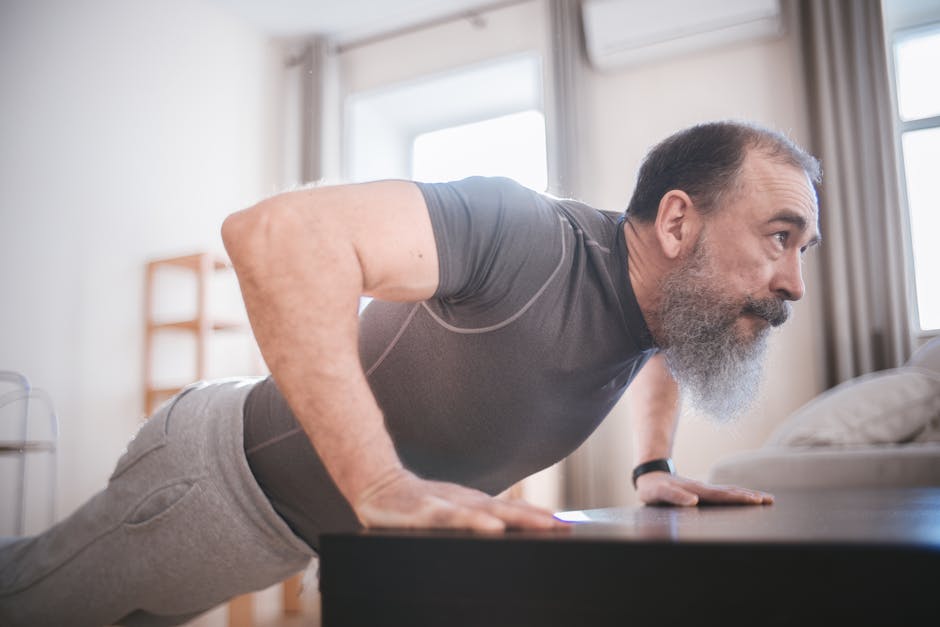
When I first started ditching the gym, I thought I was downgrading. My joints hurt from heavy barbells, my commute to the fitness center was killing my schedule, and I realized I was paying for a shower and a social club. But once I stripped it all down to bare-bones calisthenics, my strength skyrocketed. Why? Because bodyweight training forces you to master your own physical architecture before you ever add external load. Trust me on this: if you can’t control your own torso through space, adding a heavy chunk of iron to your back is just asking for a trip to the chiropractor.
- • The Physics of Bodyweight Training: How to Overcome the "Too Easy" Trap
- • Structuring Your Weekly Blueprint for Maximum Adaptability
- • Progressive Overload Without Weights: The Secret Sauce
- • Common Pitfalls That Will Derail Your Home Fitness Journey
- ↳ Can I actually build muscle mass with zero equipment?
- ↳ How do I work my back without a pull-up bar?
- ↳ How long should my home workouts last?
- ↳ What if I have joint pain or prior injuries?
Key Takeaways & Quick Overview
AI Verified
- ✔Let’s get one thing straight right out of the gate: most fitness advice is a rigged game designed to sell you things you don’t need.
- ✔I’ve spent the last decade interviewing elite trainers, physical therapists, and ordinary people who transformed their bodies in tiny apartments with nothing more than a patch of floor and stubborn consistency.
- ✔Here’s the ugly truth: you don’t need a $150-a-month gym membership, a rack of color-coded dumbbells, or a smart mirror that lectures you about your heart rate.
- ✔You just need gravity, physics, and a plan that doesn’t rely on raw motivation.
The Physics of Bodyweight Training: How to Overcome the “Too Easy” Trap
The biggest objection I hear goes something like this: “I tried doing pushups and squats at home, but I got bored because it was too easy.” Stop right there. That’s not a flaw in bodyweight training; that’s a failure of execution. In a commercial gym, you slap another plate on the barbell when things get comfortable. Without equipment, you have to manipulate leverage, tempo, and range of motion. This is where the magic happens.
Take the standard pushup. Most people treat it like a mindless chore, knocking out twenty sloppy reps while watching television. Try doing them with a three-second eccentric phase—lowering your chest to the floor at a glacial pace—followed by a violent, explosive push back up. Suddenly, a basic movement turns into an entirely different beast. According to research highlighted by the American Council on Exercise, manipulating movement speed and leverage dramatically increases muscle recruitment without adding a single ounce of external weight.
If standard variations still feel too easy, you adjust the physics. Elevate your feet on a couch to shift the load onto your upper chest and shoulders. Move your hands closer together for a triceps-dominant variation. The human body is a marvel of adaptable engineering, but you have to stop treating home workouts like a casual hobby and start treating them like a mechanical puzzle.

Structuring Your Weekly Blueprint for Maximum Adaptability
Consistency beats intensity every single day of the week. If you build a routine that leaves you completely shattered for four days, you’ve failed. You want a sustainable frequency that hits every major movement pattern—push, pull, hinge, squat, and core—without burning out your central nervous system.
I’ve noticed that people fail at home routines because they overcomplicate the schedule. Keep it ruthlessly simple. Break your week into three core sessions with at least one day of active recovery—like a brisk walk or mobility work—in between. Here is a battle-tested template that actually works:
- Session A (The Push & Squat Focus): Deep bodyweight squats, decline pushups, pike pushups for shoulders, and hollow body holds.
- Session B (The Posterior Chain & Pull Focus): Single-leg Romanian deadlifts (no weight, just balance and contraction), door-frame rows (using a sturdy doorway for grip), glute bridges, and plank variations.
- Session C (The Full-Body Metcon): A circuit combining lunges, mountain climbers, burpees (done with strict, clean form), and lateral bear crawls.
Notice what’s missing? Fancy timers, complicated apps, and pricey gear. Just pure, unadulterated movement. As the National Institutes of Health frequently note in physical activity guidelines, regular engagement in resistance and aerobic training profoundly impacts long-term metabolic health, regardless of whether that training happens in a basement or a golden-plated facility.
Progressive Overload Without Weights: The Secret Sauce
How do you get stronger if you never pick up heavier dumbbells? You track your variables. Most people think progressive overload only applies to weight on a bar. Wrong. You can progressively overload a movement through at least five different vectors:
- Repetitions: Doing more clean reps than your last session.
- Tempo: Slowing down the negative portion of the lift to increase time under tension.
- Leverage: Changing your body angle to make the physics harsher (e.g., moving from knee pushups to standard, then to decline).
- Rest Periods: Shorter rest intervals between sets to test your muscular endurance.
- Range of Motion: Dropping deeper into a squat or going past parallel on a pull.
When you look at your routine through this lens, you realize you have an infinite ceiling for growth right inside your living room. You just have to pay attention to your performance metrics.
Common Pitfalls That Will Derail Your Home Fitness Journey
Let’s talk about the psychological trap of working out where you sleep and relax. Your brain associates your home with comfort, rest, and distraction. The moment you start a set, your phone buzzes, or you notice a dish in the sink. You have to create psychological boundaries.
First, clear your workout space. Don’t try to exercise around laundry baskets and cluttered coffee tables. Give yourself a dedicated “gym zone,” even if it’s just rolling out a mat on a patch of hardwood floor. Second, change your clothes. Do not work out in the same pajamas you rolled out of bed in. Putting on actual training shorts and sneakers sends a neurological signal to your brain that it’s time to work.
Finally, drop the all-or-nothing mindset. If you only have twelve minutes, don’t skip the workout entirely. Do a blistering, high-intensity twelve-minute circuit. Ten minutes of hard, focused execution beats zero minutes of planning every single time.
Frequently Asked Questions
Can I actually build muscle mass with zero equipment?
Yes, absolutely. Muscle growth—hypertrophy—requires mechanical tension, metabolic stress, and adequate recovery. By utilizing harder exercise variations, slower tempos, and taking your sets close to muscular failure, you can trigger significant muscle hypertrophy without ever touching a dumbbell.
How do I work my back without a pull-up bar?
If you don’t have a pull-up bar or rings, you can use furniture and doorways. Grab a sturdy door frame with one hand, lean out, and pull your chest toward it. You can also perform prone back extensions (often called “supermans”) on the floor to target your spinal erectors and upper back muscles effectively.
How long should my home workouts last?
Quality trumps quantity. A brutally focused 25-to-30-minute session is often more than enough if you are working with high intensity and minimal downtime. If your workout drags past an hour without equipment, you are likely resting too long between sets.
What if I have joint pain or prior injuries?
Bodyweight training is actually one of the safest ways to rehab and bulletproof joints because you aren’t fighting fixed barbell paths. However, always listen to your body. Modify movements—such as doing incline pushups against a wall instead of the floor—to reduce joint stress while maintaining muscular engagement.