
I’ve noticed a disturbing trend in how we start our mornings. We grab a sugary pastry, or worse, “healthy” cereal that spikes our glucose levels faster than a sports car. Then, by 10:30 AM, our stomachs are staging a violent mutiny. We are raiding the office vending machine like desperate thieves. Here’s the ugly truth: most breakfast advice is written by people who have never stared down a 3 PM sugar crash while trying to finish a quarterly report. Trust me on this—the secret isn’t willpower. It’s physics, specifically the slow-burning chemistry of dietary fiber. If you want to shut down your appetite for good, you need to rethink the first meal of your day from the ground up.

- • Why Your Current Morning Routine Is Sabotaging Your Hunger Hormones
- • The 15-Gram Morning Threshold: What You Actually Need to Eat
- ↳ 1. The Overnight Chia and Wild Berry Power Bowl
- ↳ 2. The Savory Sprouted Grain and Avocado Smash
- ↳ 3. The No-Excuse Green Green Smoothie (That Doesn't Taste Like Grass)
- • Troubleshooting Your New High-Fiber Reality
- ↳ Can I use quick oats instead of rolled or steel-cut oats?
- ↳ Will eating this much fiber in the morning cause stomach cramps?
- ↳ Is fruit fiber as effective as vegetable or grain fiber?
- ↳ How long before lunch will I actually feel full?
Key Takeaways & Quick Overview
AI Verified
- ✔I’ve noticed a disturbing trend in how we start our mornings.
- ✔We grab a sugary pastry, or worse, “healthy” cereal that spikes our glucose levels faster than a sports car.
- ✔Then, by 10:30 am, our stomachs are staging a violent mutiny.
- ✔We are raiding the office vending machine like desperate thieves.
Why Your Current Morning Routine Is Sabotaging Your Hunger Hormones
Let’s look at the biology. When you eat a low-fiber, high-carb breakfast, your digestive tract processes it with terrifying speed. Blood sugar shoots up. Insulin rushes in like an overzealous bouncer. Minutes later, your blood sugar plummets below baseline. That sudden drop triggers ghrelin—the hunger hormone—telling your brain that you are starving, even if you just consumed 600 empty calories. According to research from the Harvard T.H. Chan School of Public Health, increasing your daily fiber intake dramatically alters how your body processes energy and signals fullness.
Fiber slows gastric emptying. It forms a gel-like matrix in your gut that delays nutrient absorption. Think of it as putting a speed bump in your digestive highway. You stay full longer. Your energy levels flatten out into a smooth, predictable plateau. No spikes. No crashes. No standing in front of the pantry at midnight eating peanut butter straight from the jar with a spoon.
The 15-Gram Morning Threshold: What You Actually Need to Eat
Most people get around 10 to 15 grams of fiber a day. That is a tragedy. Our ancestors consumed upwards of 50 to 100 grams daily. While you don’t need to forage for roots, aiming for at least 12 to 15 grams of fiber in your very first meal is a game-changer. It anchors your appetite for the next six to eight hours.
How do you hit that number without chewing on tree bark? You combine viscous soluble fiber with insoluble roughage. You layer ingredients strategically. Let’s break down three dead-simple, highly tactical breakfast options that take less than ten minutes to prepare.
1. The Overnight Chia and Wild Berry Power Bowl
Forget standard instant oatmeal packets loaded with processed cane sugar. Instead, grab rolled oats, chia seeds, and frozen wild blueberries.
- 1/2 cup rolled oats (approx. 4g fiber)
- 2 tablespoons chia seeds (approx. 10g fiber)
- 1/2 cup wild blueberries (approx. 3g fiber)
- A splash of unsweetened almond milk and a scoop of unflavored plant or whey protein.
Mix it up the night before. By morning, the chia seeds and oats have absorbed the liquid, creating a thick, pudding-like consistency. You are looking at roughly 17 grams of fiber in a single bowl. As noted by the Mayo Clinic, gradual increases in fiber intake are key to preventing digestive discomfort, so start slow if your gut isn’t used to this volume.
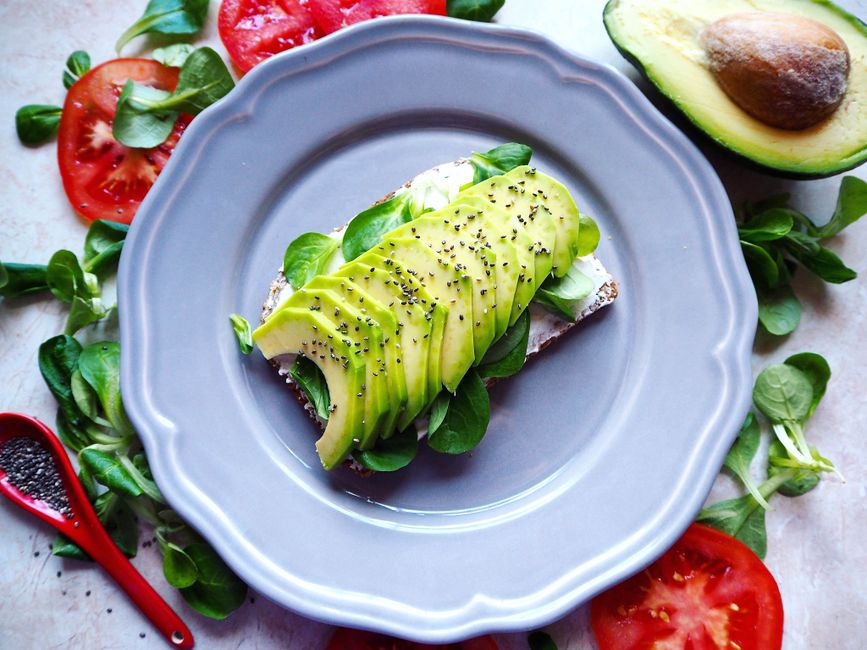
2. The Savory Sprouted Grain and Avocado Smash
Sweet breakfasts aren’t mandatory. If you prefer savory flavors, this takes three minutes. Take two slices of heavy, dense sprouted-grain bread (like Ezekiel bread). That’s about 6 grams of fiber right there. Toast them until they are aggressively crunchy.
Mash half an avocado on top—adding another 5 grams of fiber and healthy monounsaturated fats. Then, crown it with two tablespoons of pumpkin seeds or hemp hearts (another 2 to 3 grams). Squeeze fresh lemon juice, add sea salt, and red pepper flakes. You just built a 14-gram fiber powerhouse that tastes like it came out of an upscale Brooklyn cafe.
3. The No-Excuse Green Green Smoothie (That Doesn’t Taste Like Grass)
I know. Most green smoothies taste like blended lawn clippings. Let’s fix that. The secret is balancing bitter greens with the right fiber density.
Throw two packed cups of baby spinach into a high-speed blender (2g fiber). Add one frozen banana for texture, a tablespoon of flaxseed meal (3g fiber), a tablespoon of almond butter, and a cup of raspberries (8g fiber). Top with water or coconut water. Blend until velvety. You get over 13 grams of fiber, a massive hit of micronutrients, and a drink that keeps you satiated until well past noon.
Troubleshooting Your New High-Fiber Reality
If you jump from 10 grams of fiber to 40 grams overnight, your stomach will let you know. Loudly. Gas and bloating happen when the gut microbiome is suddenly forced to ferment a massive influx of complex carbohydrates.
Drink more water. I cannot stress this enough. Fiber acts like a sponge; without adequate hydration, it will bind things up rather than smoothing them out. According to guidelines from the National Institutes of Health, pairing increased fiber with adequate fluid intake is essential for optimal gastrointestinal motility.
Give your system about a week to adapt. Once your microbiome adjusts, the bloating vanishes, replaced by a steady hum of metabolic energy and an uncanny absence of mid-morning cravings.
Frequently Asked Questions
Can I use quick oats instead of rolled or steel-cut oats?
You can, but quick oats have a higher glycemic index because they are more processed. Rolled oats or thick-cut oats retain more of their structural integrity, meaning they digest slower and provide better, longer-lasting appetite control.
Will eating this much fiber in the morning cause stomach cramps?
It can if you aren’t used to it. If your current diet is low in fiber, ramp up gradually over 10 to 14 days. Add one high-fiber food item every few days and double down on your water intake.
Is fruit fiber as effective as vegetable or grain fiber?
Yes and no. Fruits like raspberries, blackberries, and pears are exceptionally high in soluble fiber, which is phenomenal for blood sugar regulation. However, varying your sources—combining seeds, whole grains, and greens—gives your gut microbiome the diverse fuel it needs to function at its peak.
How long before lunch will I actually feel full?
When you hit the 12-15 gram fiber mark at breakfast combined with adequate protein, most people notice an immediate elimination of the psychological “itch” to snack by 10 AM. True physiological satiety usually settles in within 20 minutes of finishing your meal.